 Lateres
Contractors call for exemption from tourist tax
Added 25 Nov 20263 min read
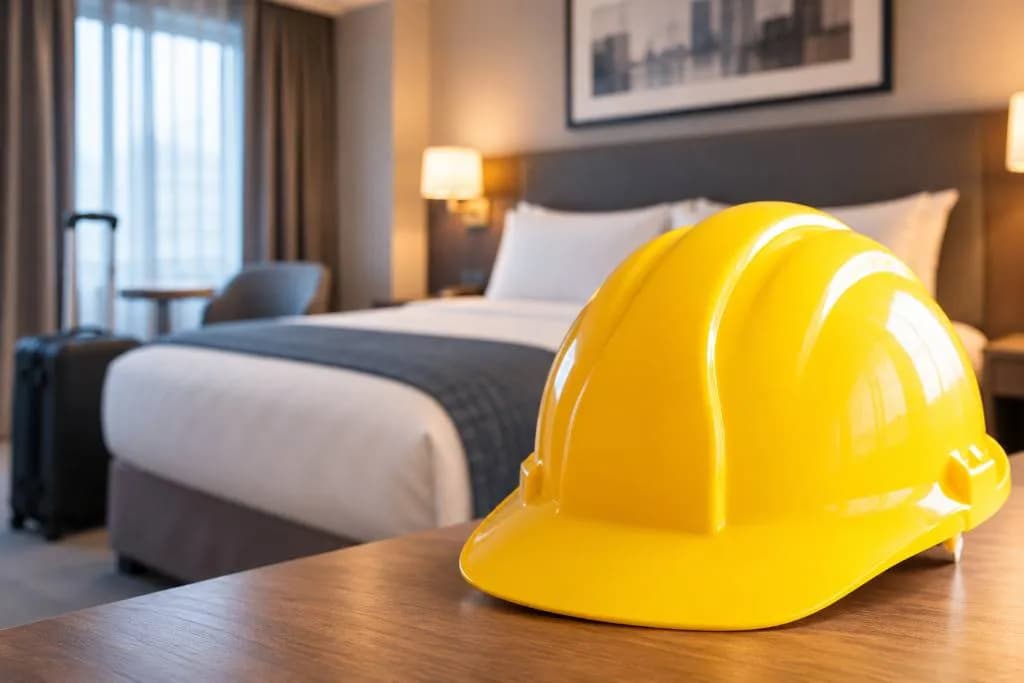
Contractors staying away from home to work on construction sites should be exempt from England’s proposed visitor levy, the Electrical Contractors’ Association (ECA) has told MPs.
The ECA warned that the charge could add to the cost of running jobs, with smaller firms at risk of being left to pick up the bill on fixed-price contracts.
It also warned that the levy could push up future tender prices, including for publicly funded construction projects.
The Visitor Levy (England) Bill, introduced to Parliament on 4 November, would allow mayors to introduce a charge on overnight stays in hotels and other accommodation. The money raised would go towards local services, transport and public spaces.
In its written evidence to MPs, the ECA said workers should not face the charge when they need a hotel room to do their job.
Electricians may have to stay near a site if they have an early start, are working night shifts or need to be on hand for emergency repairs. The ECA said these stays are a work expense, not a leisure trip.
“An electrician staying near a site for an early start or an urgent repair is there to do a job, not take a holiday. Necessary work accommodation should not be treated in the same way as a leisure stay,” said Catherine Watt, the ECA’s director of employment and skills.
The ECA wants the exemption to apply wherever a levy is introduced in England, so contractors are not faced with different rules depending on where they work.
It said this should cover employees, agency workers, subcontractors and self-employed contractors, regardless of who books or pays for the accommodation.
The exemption should apply from the first night and include short jobs and repeat visits, with no limit on the number of qualifying nights.
Contractors would not need to hold a business accommodation account or be registered for VAT to qualify under the ECA’s proposals. Identifiable leisure costs, such as holiday extensions, would remain outside the exemption.
Watt said the charge could be particularly difficult for smaller firms to absorb if it was not included in the original job price.
“MPs should put a clear national exemption in the Bill, with a simple declaration process, so businesses can get their people where they are needed without a postcode lottery of rules and refunds,” she said.
The ECA proposed that a single declaration could cover group bookings or a defined project period.
It also called for a refund mechanism where evidence was not available at booking or check-in, and a way for contractors to challenge refused claims.
Checks should not routinely require firms to disclose commercially sensitive contracts, it added.
The levy would be based on a percentage of the accommodation bill, rather than a fixed amount. Ten mayoral areas have indicated they would keep any charge they introduce to 5 per cent or less, although the bill does not impose a maximum rate.
Hotels and other accommodation providers would be responsible for paying the levy but could pass the cost on to customers.
Stays expected from the outset to last 28 consecutive days or more would be exempt altogether. The exemption could also apply to subsequent nights where shorter stays were extended to meet that threshold.
Mayors would have to consult local people and businesses before deciding whether to bring in a charge and how to spend the money.
The ECA has submitted proposed wording for a new clause in the bill. It has also called for an assessment of the potential impact on small contractors, mobile workforces, fixed-price contracts and public procurement.
The bill does not mean every hotel stay in England will be taxed. It gives mayors the choice to introduce a levy in their area. The ECA wants necessary work-related stays excluded from the rules before that happens.
The bill passed its second reading on 16 November by 296 votes to 96. The public bill committee is due to begin scrutinising the legislation on 1 December.
Where this story came from
This article was first published by Construction News and is reproduced here in full, with credit. All words and images remain the publisher’s work.
Read the original at Construction NewsMore on Builders & trades
- Sparks call for exemption from hotel tourist tax
Construction Enquirer · Added 26 Nov 2026
- Regional imbalances in apprenticeships threaten the workforce pipeline
Construction News · Added 25 Nov 2026
- ECA seeks exemption from hotel levies
The Construction Index: UK · Added 23 Nov 2026
Building in Blackburn with Darwen?
Lateres is a family-run construction company working across Lancashire. If a story here affects your property or project, we are happy to talk it through.