 Lateres
‘Terrible clients’: MPs blamed for rising restoration costs
Added 25 Nov 20264 min read
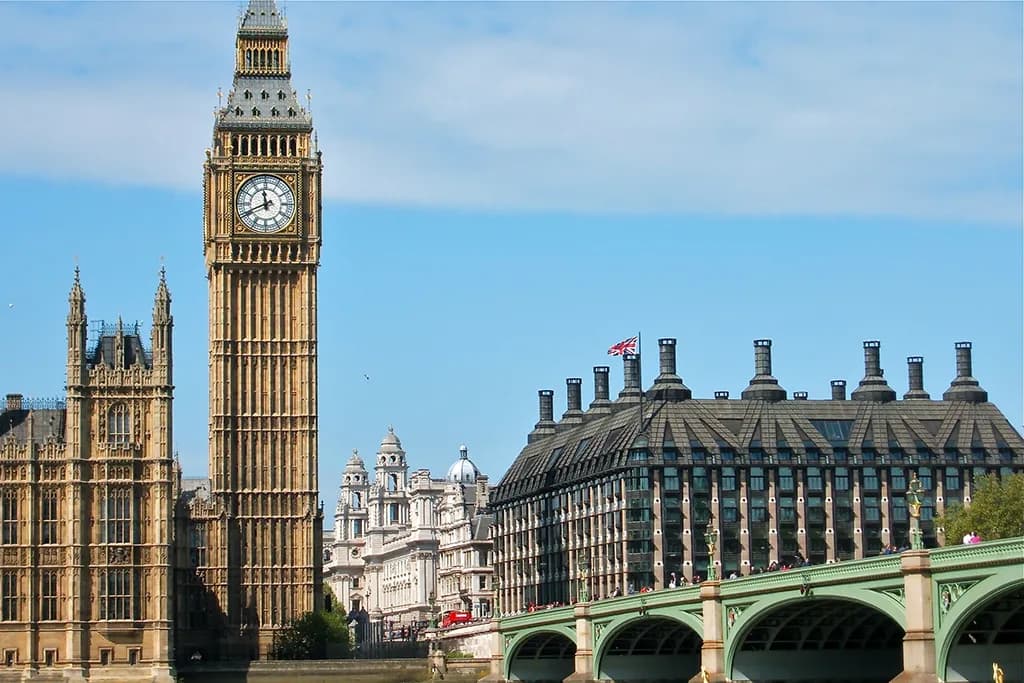
Parliamentarians have been branded “terrible clients” during a debate in which the leader of the House of Commons acknowledged that parliamentary indecision was driving up restoration costs.
Conservative MP Jerome Mayhew highlighted contingencies ranging from 32 per cent to 135 per cent of base costs under the two recommended Palace of Westminster restoration options.
He blamed the age of the building, Parliament’s failure to agree a scope of works, repeated changes of direction and excessively complicated governance arrangements.
Mayhew said parliamentarians were “terrible clients: we do not know what we want, we have not decided what the scope is, we change our minds the whole time”.
The contingencies include allowances for both risk and optimism bias.
During the debate yesterday (25 November), Commons leader Sir Alan Campbell agreed that Parliament’s behaviour was contributing to the high contingencies.
He said companies would calculate the cost of carrying out the works before factoring in additional risk to reflect Parliament’s record of indecision.
Businesses had reason to question whether parliamentarians were serious about proceeding with the restoration and whether they would stick to an agreed plan, he said.
Campbell argued that the problem was not a lack of political control, but that politicians had interfered with and changed almost every decision.
He rejected the suggestion that businesses were seeking to exploit Parliament, instead blaming politicians’ inability to make decisions and adhere to them.
Mayhew criticised the programme’s “labyrinthine governance”, highlighting the involvement of both Houses, their respective commissions and clerks, the client board, the programme board and its sub-board, the client team, Strategic Estates and the delivery authority.
Mayhew challenged Campbell to establish “simple, accountable governance that we can all believe in” if he was serious about progressing the restoration.
Campbell conceded the governance arrangements were like “spaghetti” and pledged to simplify them within six months, subject to parliamentary approval of a £3bn package of initial works, excluding inflation.
The public accounts committee (PAC) warned earlier this month that the restoration programme lacked a single point of authority and accountability.
Yesterday, MPs voted by 291 to 102 to reject the original wording of a Conservative motion expressing concern over the projected costs, scope and governance of the restoration programme.
The Commons subsequently backed a government amendment supporting a decision on the way forward before the end of the year.
MPs will be asked to approve the seven-year programme on 8 December, with the proposals also requiring approval from the House of Lords.
Campbell said Parliament was currently spending £1.5m a week patching up deteriorating systems within the palace, with that figure expected to rise to £2m a week.
Meanwhile, Commons finance committee chair Steve Barclay argued that the overall cost of a full “decant” of Parliament could exceed £22bn.
The option, under which both Houses would vacate the palace for much of the work, was previously estimated to cost £11.1bn-£15.6bn over 19-24 years.
An alternative phased programme, allowing the Commons to continue sitting in the palace, was estimated to cost £19.5bn-£39.2bn over 38-61 years.
Barclay pointed to £5.3bn of expenditure elsewhere in the parliamentary estate programme that was excluded from the published restoration cost estimates.
He said £3bn of that expenditure was considered essential to facilitate a full decant.
A further £1.7bn related to interim works on the palace, much of which he said would subsequently be removed.
His assessment also took into account £612m in expenditure already incurred by the delivery authority and around £100m of proposed streetscape works.
It also included a provisional cost increase of up to £800m, excluding inflation, arising from delays to temporary Commons accommodation if no mitigation measures are implemented.
Barclay also questioned whether the constrained parliamentary estate could accommodate a planned increase in annual expenditure from £200m to £600m by 2030.
The £3bn package of initial works would include the procurement of a strategic delivery partner, provision of temporary parliamentary accommodation and enabling works.
The Restoration and Renewal Delivery Authority intends to work with a programme partner to develop individual work packages before releasing them to suppliers.
However, the authority has yet to finalise its commercial strategy for the main restoration works.
The PAC warned that several elements of the initial package had yet to be costed.
These include riverside security, the isolation and relocation of building services, and restoration of the medieval Cloister Court.
Around £500m of the £3bn spending cap remains unallocated to cover uncosted works and potential cost increases, in addition to contingencies built into individual projects.
Approval of the initial package would see the number of restoration options under development reduced from four to two.
Updated cost estimates would be provided by 2029, ahead of a final decision on whether to pursue a full decant by mid-2030.
Shadow Commons leader Jesse Norman proposed an independent 90-day review of engineering assessments, procurement plans and cost estimates to establish a reduced scope of works.
However, Campbell argued that the review would cost £100m in further delay without guaranteeing progress.
This story was sourced, developed, checked and edited by a human editor, with drafting and additional checking assistance from a bespoke Construction News AI tool.
Where this story came from
This article was first published by Construction News and is reproduced here in full, with credit. All words and images remain the publisher’s work.
Read the original at Construction NewsMore on Costs & money
- Energy price cap hits £2,166: 3 ways to soften the January rise - and the cheapest fixed deals
Which? News · Added 16 Nov 2026
- High Court orders developers to complete housing site works and pay £122k costs
Lancashire Telegraph: Blackburn · Added 13 Nov 2026
- What are your rights when pension providers slip up?
Which? News · Added 13 Nov 2026
Building in Blackburn with Darwen?
Lateres is a family-run construction company working across Lancashire. If a story here affects your property or project, we are happy to talk it through.