 Lateres
The costly mistake you need to avoid when buying a home appliance
Added 12 Nov 20269 min read
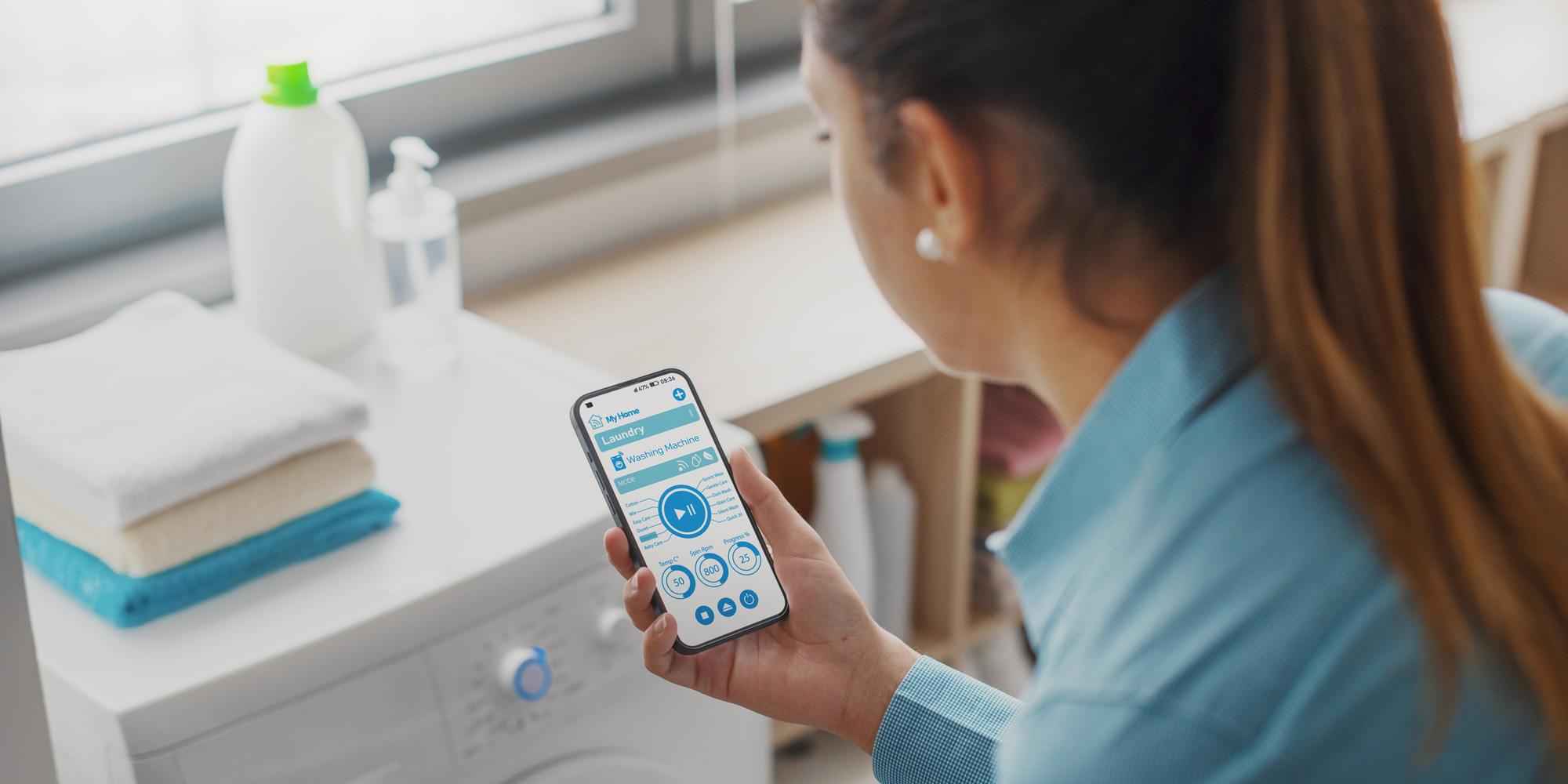
Smart features can add convenience by allowing you to check how long is left in a washing machine cycle from your mobile, or add handy extra dishwasher programs exclusive to smart models. But these rely on ongoing support, and it’s not always clear what you might lose if this ends. So checking the ‘best before date’ for your appliance is crucial if you’re buying a connected device (wi-fi or otherwise) for your home, and this can vary greatly from brand to brand.
Fortunately, many white goods are now legally required to clearly tell you the minimum length of support. Here we’ll uncover some of the best and worst brands for support duration, so you know which to choose and which could catch you out.
Home appliance brands with the best and worst support policies
Thanks to the PSTI Act (Product Security and Telecommunications Infrastructure) of 2022, it's now legally required that brands publish ‘information on minimum security update periods’, something Which? advocated to happen for more than 10 years. The Act stipulates that the support periods ‘must be published and made available to the consumer in a clear, accessible and transparent manner.’ This means you have the insight to choose wisely when buying a smart device, and encourages brands to support their devices for longer.
In practice however, the length of support varies greatly depending on the home appliance brand. The best promise support for 10 years or more, but some are as short as just a single year. Adding to confusion, some brands start their support period from when the product launches, when you could have purchased it years later. Others set it from when you purchased it yourself, and the best start the clock ticking from when the brand actually discontinues selling the product themselves.
Unfortunately, that’s not the only issue. In theory this support information should be easy to find, but in practice it can be not as upfront as you might hope, even if you’re actively searching for it. That’s why we’ve rounded up the support periods for major brands in all the top home appliance areas with smart models, get the lowdown below.
Washing machines
Dishwashers
These slightly shorter policies do reflect that dishwashers typically last for slightly less time than washing machines, according to our survey of dishwasher owners. All brands had 67% of their models or better remaining fault free after six years’ use, meaning dishwashers tend to get their first fault around a year earlier than washing machines do, according to our owners’ survey.
Fridge freezers
In our survey of fridge freezer owners, which covered 23 brands, each one had 79% or more of their models remain fault-free after seven years (the best had 93%), so only BSH’s policy offers the length of life of a typical fridge freezer, according to owners.
Ovens
Our survey of owners shows 72% or more of models from every oven brand remained fault-free after seven years of ownership, showing Miele and BSH’s commitment are the policies that reflect typical oven lifetime, according to our survey of owners.
Tumble dryers
Tumble dryers are very long-lasting appliances, according to our survey of owners. Excluding one brand, all others had 80% or more of tumble dryers remaining fault-free even after seven years’ ownership. So if you want your smart features to remain supported for the lifetime of your tumble dryer, choosing a good Miele or BSH model would certainly be a wise option.
Other smart product brands
What happens when a device is no longer supported?
An out of support appliance will no longer receive firmware updates and security patches. Software doesn’t exist in a vacuum when it’s connected to the internet, and so security patches are needed to respond to the latest threats and vulnerabilities.
Newer technologies including AI have also made it much easier for malicious actors to identify and exploit vulnerable software, it also means far more people could take such action, deliberately or by accident.
So while just after an appliance drops out of support the risk remains fairly low, the risk increases over time. That’s why it’s important to keep software up-to-date, and replacing obsolete devices. Some home appliances are also riskier than others, such as smart ovens.
One high-profile example is British Gas’ former smart home brand Hive. British Gas scrapped its smart security range in 2022 and started shutting down products from 2023, including the Hive Nano 1 Hub, Hive Camera and Hive Leak Sensor, pulling the plug on all its other smart products by 2025.
Most home appliances aren’t as dependent on their smart features as Hive, though. So when an appliance’s support ends, you may start to find some features are no longer available, become outdated or buggy, which is annoying, but probably won’t force you to stop using the appliance entirely, usually its core features will still work just fine.
To be fair to brands, lengthy support for appliances is a real challenge. Unlike tech products that are often replaced after a few years, most people keep appliances far longer. Expecting a decade’s free ongoing software support for a £250 washing machine is probably unrealistic, what’s important is you know what you’re getting into when you buy that product, so there aren’t any nasty surprises.
Can I keep an unsupported appliance secure?
The good news for most home appliance products is that an internet connection isn’t essential. So if the product continues to work fine without the smart features, you could keep it secure simply by disabling its wi-fi connection (or other way it connects to the internet, such as via Bluetooth to your smartphone), where possible.
For broader advice, the UK’s National Cyber Security Centre (NCSC) suggests the following for keeping yourself safe when using devices that no longer receive security updates:
- ‘Reduce the likelihood of compromise by preventing obsolete devices from accessing untrusted content, effectively making it hard for malicious content to reach the device and exploit it.’ For example, you could only visit trusted websites or completely deactivate the devices connection to the internet.
- ‘Reduce the impact of compromise by preventing access to sensitive data or services from the vulnerable devices, so even if the devices are compromised, the damage will be minimised.’ Examples of sensitive data or services include banking apps, shopping apps and work-related emails and apps.
The NCSC warns, however, ‘this guidance does not provide a risk-free way of continuing to use obsolete products, but will help to reduce the risks of doing so. The only fully effective way to mitigate this risk is to stop using the obsolete product.’
How to shop smart for a smart appliance
You an assume home appliances will be smart devices if they are wi-fi (or ethernet) connected, or promise an app for your smartphone or tablet.
For any smart device, crucial additional information you need to consider when shopping is to check the support period, this can avoid nasty surprises when a handy feature you bought the appliance for doesn’t last the lifetime of the appliance.
The examples above show how greatly support periods can vary, and that you cannot assume that a premium brand or expensive appliance will offer long support. In fact, many people keep their appliances for well over a decade, and so for even for the brands offering the longest support periods, you may eventually need to plan for when your older appliance falls out of support (see ‘What happens when a device is no longer supported?’ section above).
Although Which? includes guidance on typical support policies in our advice pages, the best source to check for the specific appliance you’re intending to buy is the brand’s website. It’s a legal requirement (as part of the PSTI Act) that brands publish the minimum guaranteed support duration for (with an end date), and this covers a wide range of internet-connected household appliances from coffee machines to smart vacuum cleaners.
While this information should be easily accessible, it can unfortunately be difficult to source what you need on brand websites: an internet search with Google for the appliance name and its PSTI software support duration is often the better method. Using AI Mode in Google Search is even easier: you can then follow the links directly to confirm at source. For example, type: ‘how long will my [appliance brand] product receive updates under PSTI’ or ‘[brand and model] PSTI statement’.
Usually, the manufacturer’s website will include a full list of all its appliances with specific end-of-support dates for each (this may be buried in a PDF document). In some cases, support may be updated or extended. If you can’t find the information on the brand’s website, it's always worth confirming by contacting the brand using the website’s live chat service (where available) or via email.
The guaranteed support period may be stated by when the product first released, when you bought it, or when the brand discontinued selling it. So don't just consider if it says ‘five years’, but when that countdown starts or started. The information should make this clear, but if you need to check when a product first launched, this is usually detailed early on in Which? product reviews alongside the date it was reviewed. Then you’ll know when support will end.
Pre-owned appliances
It’s even more important to check support periods for smart appliances when buying second-hand, as the period could be very short or even have already expired. This means that if you are intending to buy second-hand, you should bear in mind our advice for unsupported devices above and not assume you’ll be able to access all the devices smart features that rely on ongoing support.
Is it really worth buying a smart appliance?
While smart appliance features can sometimes be gimmicky, brands have now had many years to develop truly useful smart features for them. Here are some of the best features smart appliances offer:
More than half of the top-performing washing machines have smart features (54% of Best Buy models), including four of the top-six models overall. Similarly for dishwashers, 59% of Best Buy models have smart features, including all six of the top-scoring models.
Higher-end appliances with more features are more likely to have smart features. For washing machines, the average model we’ve reviewed with smart features costs £617, versus £454 for models without any smart features (for dishwashers, it’s £686 for those with smart features, and £521 those without).
This means that if you’re considering spending a bit more on your appliance in the hopes it’ll last longer, you are more likely to choose a model with smart features that will have a finite length of support. Fortunately, traditional home appliances rarely require subscriptions for their core smart features, unlike in some more techy products like Ring doorbells and advanced features with some Tado thermostats.
Where this story came from
This article was first published by Which? News and is reproduced here in full, with credit. All words and images remain the publisher’s work.
Read the original at Which? NewsMore on Costs & money
- 32% of construction SMEs have less than two months of cash reserves
Construction News · Added 23 Nov 2026
- The energy price cap is increasing by 26%: 3 quick and easy things you can do today to protect your energy bills
Which? News · Added 20 Nov 2026
- Welsh and South West trades wages overtake London
Construction Enquirer · Added 20 Nov 2026
Building in Blackburn with Darwen?
Lateres is a family-run construction company working across Lancashire. If a story here affects your property or project, we are happy to talk it through.